TPO
A thermoplastic single-ply option with heat-welded seams. Thickness, reinforcement, attachment and approved details belong in the scope. Existing aged material may require specific preparation before repair.
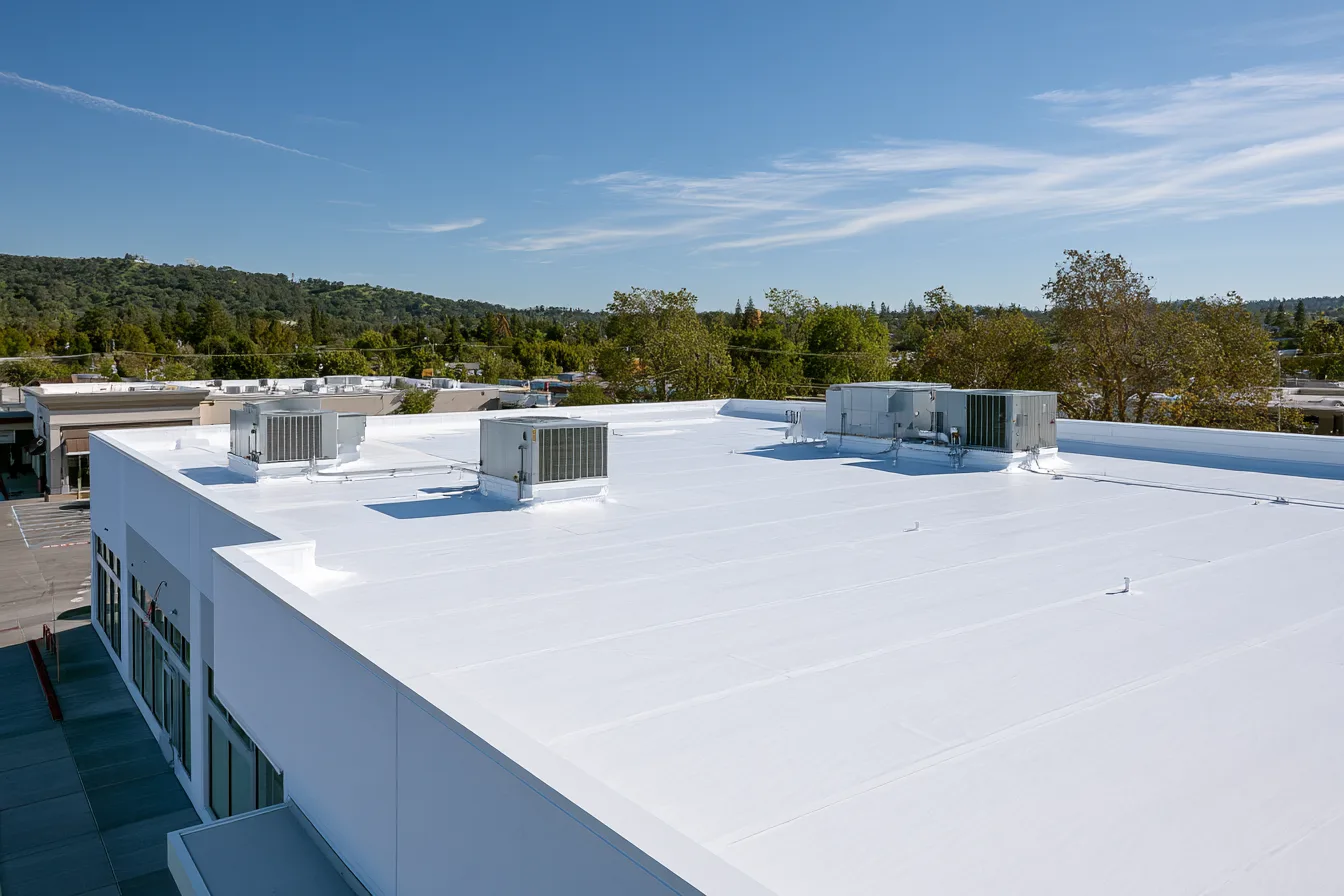
Sand Springs, OK
A leak over merchandise needs attention, but so does the loading area where roofing materials will arrive. Our roofers plan commercial work around the roof system and the building below it, from a failed seam to a full replacement.
Low-slope buildings
In a shop or leased office, the ceiling tile that gets wet is where the leak ends. Water may have followed the deck from a drain, a seam or the raised base around rooftop equipment. Our roofers trace those connections so the repair reaches the opening that let rain in.
The building matters when the work starts, too. A stockroom full of goods, a customer entrance and a delivery bay need different staging arrangements. Tell us where water is showing and how the space is used; that gives the roofing plan a useful starting point.
What the work covers
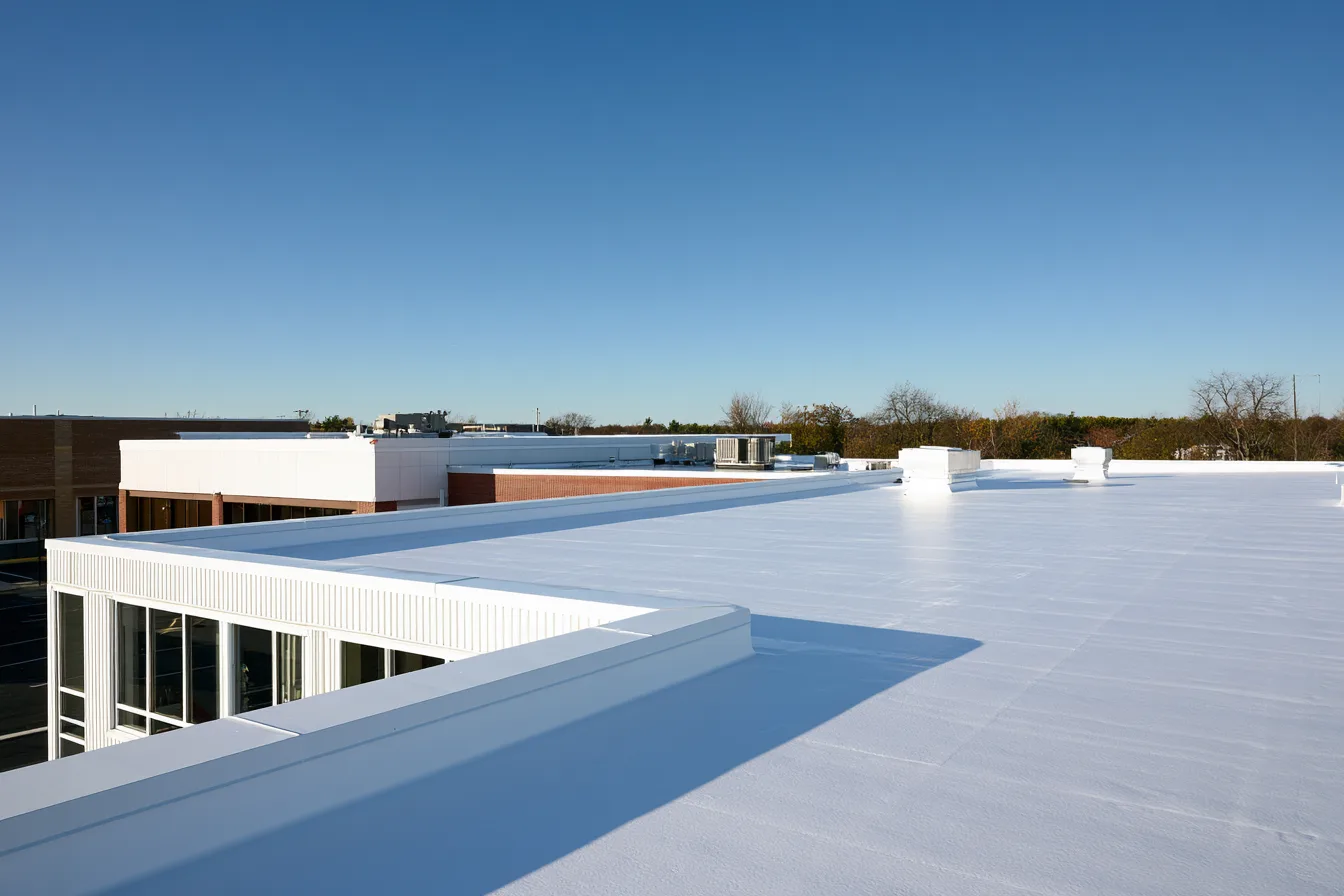
A broad membrane surface still has edges, drains and equipment breaking through it. The scope needs to address the failed detail and any layers water reached below it.
An open seam gives water a route beneath the sheet. The roofer identifies the membrane and uses the preparation and joining method that belongs to it.
A rooftop unit sits on a raised curb. Roofing has to turn up and seal around that curb; a patch out on the open roof will not close a gap at its corner. Equipment work belongs with the relevant trade.
A blocked drain holds water on the roof. A leaking connection at the drain lets it into the building. Our roofers check the outlet, its roof connection and the overflow route so those different problems are addressed.
Metal coping covers the top of a parapet wall. Loose joints and a failed membrane termination below it can let rain enter at the perimeter, beyond an otherwise sound roof field.
Wet insulation or a deteriorated deck cannot be made sound by covering it. Where moisture is suspected, the investigation establishes what needs removal before a recover or coating is priced.
A new layer leaves the old assembly underneath. Existing layers, attachment and moisture determine whether that is workable and allowed; removal is part of the comparison when it is not.
A coating needs a clean, suitable surface and repaired seams and flashings. Compatibility and adhesion come before the attractive price of keeping the old roof.
Replacing a roof flashing is different from repairing an air-conditioning unit or restoring a stained interior. A clear proposal identifies those boundaries so the right work is included.
A roof-system name is the start of the specification. The assembly, attachment, insulation and details determine its suitability.
A thermoplastic single-ply option with heat-welded seams. Thickness, reinforcement, attachment and approved details belong in the scope. Existing aged material may require specific preparation before repair.
Another thermoplastic system with its own formulations and accessories. For exposure to oils, grease or other chemicals, use the actual manufacturer compatibility guidance rather than a blanket material claim.
A rubber membrane system using its specified seam and flashing products. It should not be treated as interchangeable with heat-welded thermoplastic sheets.
Identify the assembly, surfacing and condition before choosing repair products or a replacement design. Different application methods carry different site requirements.
How a commercial job runs
A small seam repair and a building-wide replacement need different levels of investigation. If a moisture survey or core cut is needed to settle what can remain, its purpose and cost are agreed before that extra work.
Our roofers connect the leak location inside with the seams, drains and equipment details above it. Existing maintenance notes can show what has already been tried.
The decision to retain insulation or old roofing needs a sound, dry base. Suspected wet layers are investigated before a recover or coating goes into the proposal.
A contained defect can have a contained repair. If failure extends across the assembly, the alternatives need to show what stays, what comes off and what each option buys.
For a building with deliveries, material staging must leave a workable receiving route. For occupied suites, access and work near rooftop equipment need coordination with the people using them.
The work sequence accounts for how much roof is opened, how it will be protected and the conditions the selected products need for installation.
Keep the product information, repair locations and actual warranty terms with the building records. They give the next inspection more to work with than a total on an invoice.
What to watch for
Use established safe roof-access procedures. A facility team can also begin with indoor observations and existing maintenance records.
Report the location and timing so drainage can be assessed.
Describe visible damage without attempting an incompatible patch.
Leaks can involve the roof flashing, equipment or both.
A changed perimeter detail needs attention before more damage develops.
A repeated or shifting leak location can help guide investigation.
What sets the figure
A commercial roof quote may cover targeted details or a complete assembly replacement. Residential shingle rates do not price that work. A useful proposal states the investigated scope, remaining assumptions and how changes will be approved.
Send the building detailsCovering, insulation, attachment and removal.
The extent of materials that cannot remain.
Curbs, outlets, penetrations and perimeter conditions.
Material handling, access and coordination with occupants.
The product and installation requirements of the selected system or warranty plan.
Restoration decisions
A coating can be a viable restoration option when the assembly is suitable and necessary repairs are completed first. Compatibility, adhesion, preparation and application thickness matter. Wet insulation, failed substrate or an unresolved drainage problem cannot be fixed by hiding them beneath a new surface.
Our roofers can explain whether the existing roof supports that option or whether removal is needed. The comparison should account for what each scope leaves in place, not only the initial price.
Good to know
The plan depends on the building and the work. A localized repair over a storage area presents different access and protection needs from removal above occupied offices. We work through staging, noise, sensitive contents and rooftop equipment with the building contact before the schedule is agreed.
A contained failure with sound surrounding material may support repair. Widespread deterioration, wet layers, attachment problems or unsuitable existing conditions can limit that option. The assessment should explain which applies and why.
No. The investigation should fit the symptoms, system and decision. A survey or core sampling can be useful where concealed moisture affects whether material can remain, but its scope and cost should be agreed first.
The actual plan determines the issuer, coverage and eligibility. Some manufacturer system warranties require an approved contractor, specified components or final inspection. Installer workmanship terms can be separate. The warranty guide explains what to compare.
Give the building location, approximate roof area or type if known, leak location and access contact. Mention occupied areas, rooftop equipment and any existing warranty. You do not need to diagnose the roof before asking.
Sand Springs Roofing Co
Tell us where the roof is leaking, or which larger project you are planning. Include the building use and access contact. Our roofers will work through the roof condition and the scope the property needs.
(918) 215-8903