Describe the change
Give the date you noticed it, visible symptoms and any immediate water entry.
Sand Springs, OK
Shingles in the yard or a fresh leak after a storm deserve a look at the roof. Our roofers check for torn, creased and impact-damaged material, then explain what needs repair and what is still sound.
After the hail
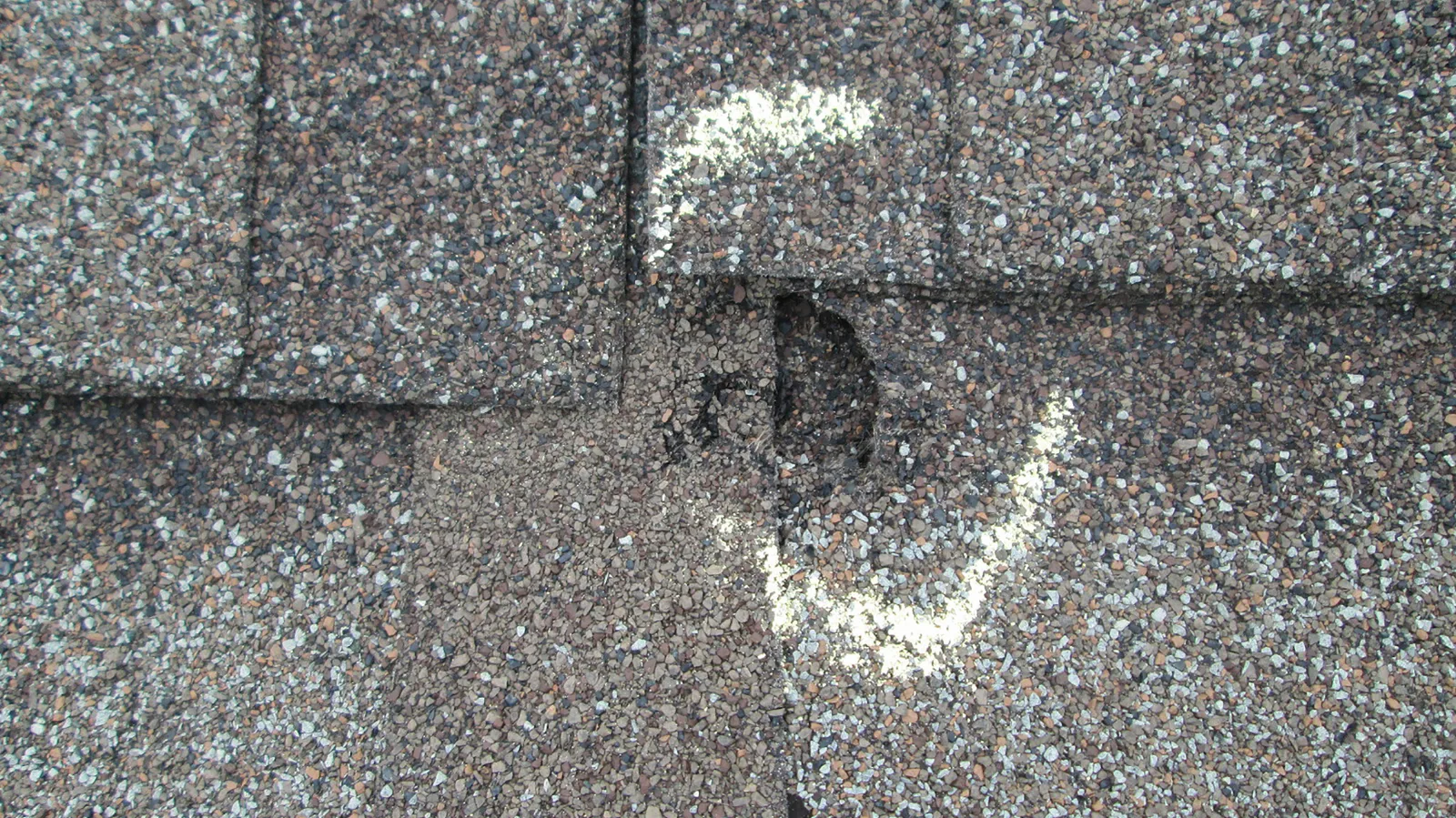
A dent in a vent cover and a fractured shingle do not call for the same repair. Hail can damage the shingle beneath its granules, while wind can lift an edge, break its seal or tear the material. Our roofers look closely at those findings instead of using the storm report as a whole-roof verdict.
The NOAA storm history helps place a reported date near Sand Springs. It does not establish damage at your property or determine what insurance covers.
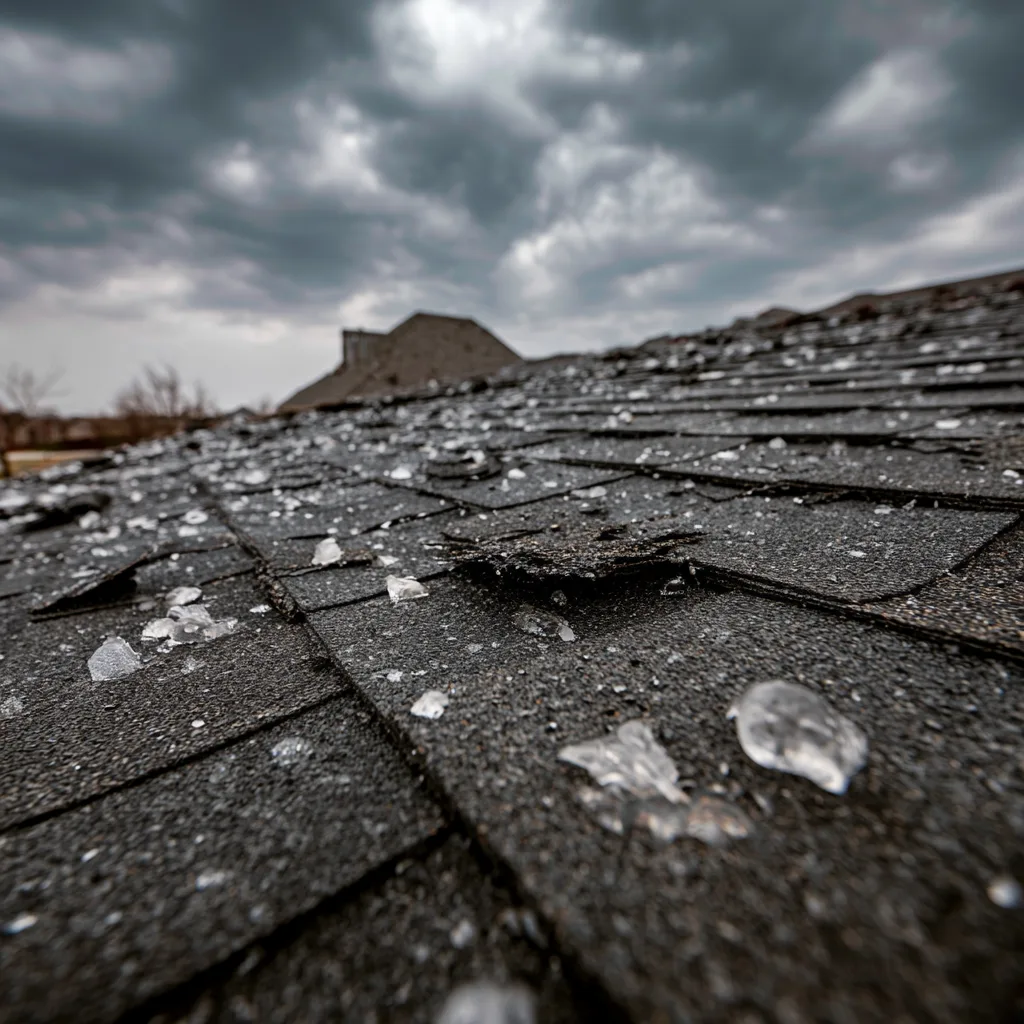
Repair includes the failed material and enough surrounding work to reconnect it properly. The exact extent depends on the damage, compatibility and condition of what remains.
The repair replaces damaged shingles and ties into material that can still be lifted and joined. A torn tab alone does not decide the fate of a whole slope.
Caps fold over the roof peaks. A lifted or cracked cap leaves an opening along that fold, so both the cap and its attachment need attention.
Metal can show impact marks without leaking. Split collars, open flashing or a broken vent create a water path and need a different scope from surface dents.
A bent gutter or damaged roof edge can send runoff behind the fascia. Repair needs to restore the water path, not just straighten what is visible.
If damaged covering is removed, the wood below it needs a look too. Soft or broken sheathing cannot hold new fasteners properly.
New shingles beside weathered ones may remain visible. Product size and exposure must fit the roof as well as the color; the proposed match belongs in the decision.
Roofing work after a storm
Report concerns promptly according to your policy and arrange safe help for active water. The claims guide explains the insurer’s separate role.
Give the date you noticed it, visible symptoms and any immediate water entry.
Our roofers inspect the affected covering and connections and explain the findings.
Review the repair or replacement scope, materials and any limitations.
Agree on price and scheduling, then complete the roofing work with the appropriate details.
Appearance alone can mislead. These distinctions help explain what the roofer is looking at.
Impact can disturb granules or fracture the shingle mat. Dents on nearby metal may add context but do not prove damage to all shingles.
Lifted, torn or creased shingles need assessment along with their fasteners and seals.
Brittleness, wear and other aging patterns can coexist with storm damage. The cause and scope need to be explained.
An active leak needs tracing to its source; the stain may be away from the entry point.
What comes out of pocket
The roof scope establishes the work and price. A claim payment depends on the insurer’s coverage decision, deductible, valuation and policy terms. Do not assume the deductible is your only possible cost.
Understand roof insurance claimsArea, access, materials and the repair connections affect the price.
The insurer determines coverage; a roofing estimate does not guarantee payment.
Deductibles, depreciation, exclusions and upgrades can leave costs with you.
A creased shingle can still shed an ordinary rain while its damaged fold remains vulnerable. Hail damage can also be hard to judge from the yard. A free inspection lets a roofer check the material itself before you decide there is nothing to do.
Keep the date you noticed the change. It helps with the record, while the inspection answers the separate question of what condition the roof is in now.
Yes. Some damage requires close inspection. Leave roof access to the roofer and describe safe observations such as missing pieces, new debris or water indoors.
No. Roof age, product, exposure and condition can differ. Your own roof needs assessment, and a finding that no repair is needed is a useful outcome.
A new product may differ from weathered shingles in color or profile. Ask about available matching material and the likely appearance. The repair also needs a compatible physical connection.
Ask what condition supports it and why repair is unsuitable. A percentage alone does not settle that question. Read the 25% roof rule guide for a practical way to evaluate the reasoning.
Sand Springs Roofing Co
Tell us about the loose shingles, water or other change you noticed. Our roofers inspect the roof for free and explain the work the damage needs.
(918) 215-8903