Inspect the section
Our roofers look at the membrane, its wall connections and the route water takes off the section.
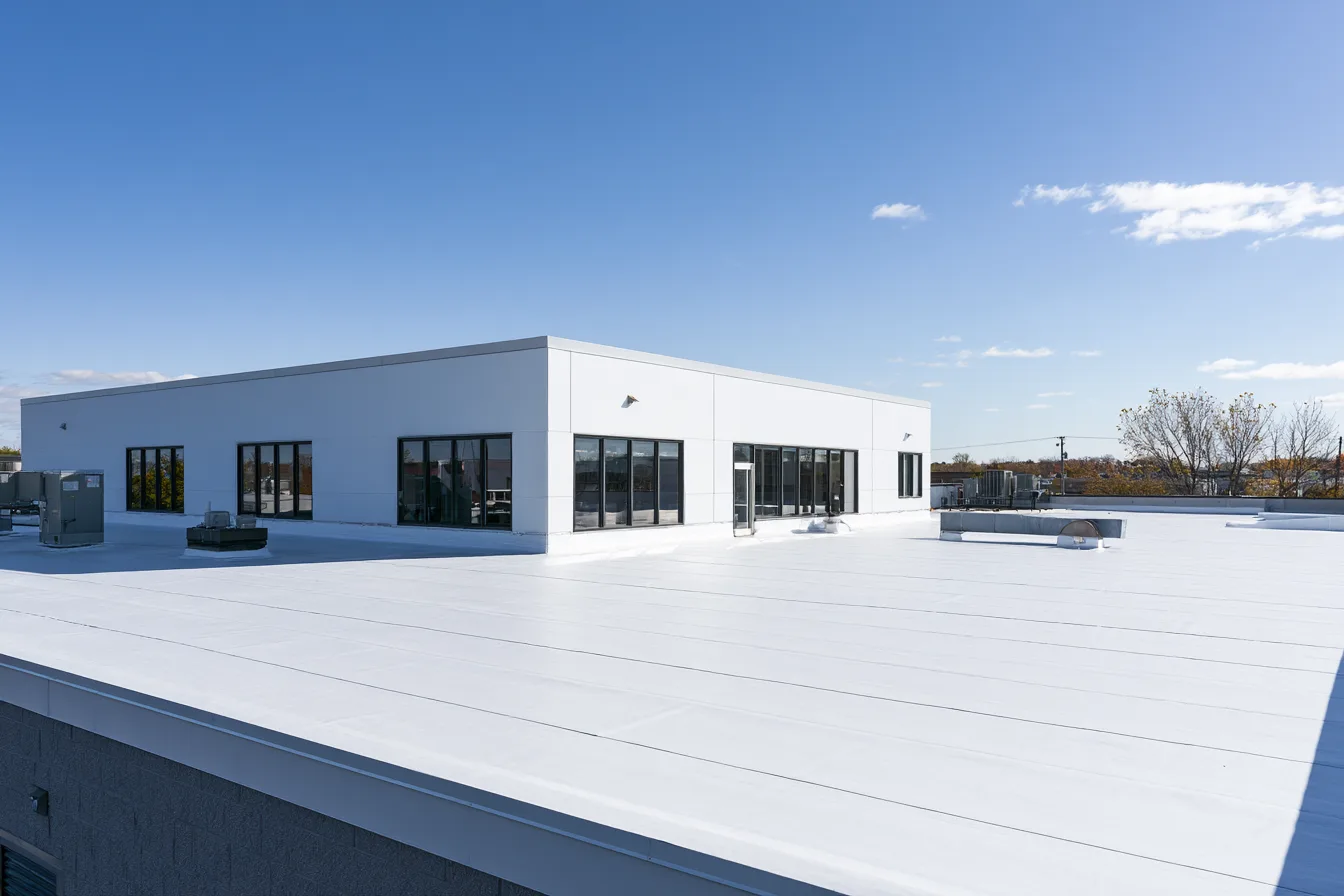
Sand Springs, OK
The low roof over a porch or addition can leak while the main roof stays dry. Our roofers check its seams, wall connection and drainage, then repair the part that is letting water through.
Flat sections
A porch or addition can need a different roofing system from the pitched roof beside it. A leak at that transition is a detail to investigate, not an automatic reason to replace the main roof. For a whole business property, see commercial roofing.
Water standing beside an outlet could be a drainage problem. Water getting beneath an open seam is a waterproofing failure. The two can occur together, but sealing the seam does not change a low spot or unblock an outlet. The repair needs to answer both findings.
Identify the existing system before choosing a patch. A repair material that suits one membrane may not bond correctly to another.
The edge of a failed lap gives rain a route under the sheet. Cleaning and joining methods depend on the actual membrane; a heat-welded repair is not interchangeable with a rubber-roof seam product.
At an addition, the low roof turns up against the house or joins a steeper roof. That junction needs to shed water over the membrane, without an exposed edge behind the wall finish.
Water has to leave through the outlet without passing beneath its connection to the roof. Debris, a damaged outlet and failed flashing are separate things to put right.
A pipe or curb interrupts the roof just as a wall does. Compatible flashing connects that raised detail to the membrane around it.
Water can spread under a small opening. If insulation or decking is wet or damaged, the repair must reach that material before the surface is closed again.
A patch closes an opening; it does not raise a low spot. Where slope or outlet placement is the problem, drainage correction needs to be priced as its own work.
If the work reaches decking or structural replacement, confirm the permit requirements.
How the repair runs
First identify the covering and trace the leak. If finding the extent requires opening the roof, the roofer explains that investigation before it happens. The selected repair product also sets the temperature and surface conditions needed for the work.
Our roofers look at the membrane, its wall connections and the route water takes off the section.
Where water may have spread below the sheet, further investigation establishes whether the insulation or deck also needs replacement.
Keep the sound covering and remove what cannot support the repair. The new work needs a dependable connection at its edges.
The installer joins the repair with the products and methods suited to that roof, including the outlet or wall detail involved.
The finished explanation should distinguish the repaired leak from any separately planned drainage or maintenance work.
Describe what is visible from a safe position. Do not walk the low roof or press soft areas to gather information.
A drainage concern can remain after the surface dries.
A visible separation needs assessment for water entry.
The cause and repairability depend on the assembly.
Restricted drainage can keep water on the roof.
Check the transition along with the membrane field.
What sets the figure
Water can travel beneath the covering before it appears indoors. The quote accounts for the failed detail, affected materials and the connection to the roof that remains. Further investigation may be needed before all concealed work is known.
The existing membrane determines suitable repair products.
Wet insulation or substrate can extend beyond the visible symptom.
Walls, drains and penetrations add detail work.
The route to the section and material handling affect the project.
A low-slope repair can fail to solve the problem if it restores only the visible surface while leaving a damaged termination or blocked outlet. The inspection should connect those details to the symptom.
Check the edge attachment and termination.
Assess walls, pitched roofs and equipment connections.
Verify the intended route to the outlet.
After a storm, assess actual roof damage rather than assuming the whole section failed.
Yes, if the failed material can be repaired and properly tied into the adjacent roof. The existing condition and transition detail determine what has to be opened.
Only if the measured slope and assembly meet the chosen product’s requirements. Truly flat or very shallow sections generally need a suitable low-slope system. The roofer should explain the requirement for the actual section.
A compatible coating may suit some sound assemblies after necessary repairs and preparation. It cannot correct deteriorated decking, trapped wet materials or poor drainage by itself.
Ask for the actual workmanship and product terms that apply to the repaired area. They do not automatically extend to the whole old roof. See roof warranties for the distinctions.
Sand Springs Roofing Co
Describe the section and what happens during or after rain. Our roofers can explain the repair or replacement work that fits the existing system.
(918) 215-8903