Inspect and measure
Check run lengths, roof drainage, outlets and support.
Sand Springs, OK
Water pouring over the gutter beside the door is a problem you can point to. The fix might be at the outlet, the fall of the run or the wood holding it up. Our roofers trace the drainage before replacing parts.
Gutters and downspouts
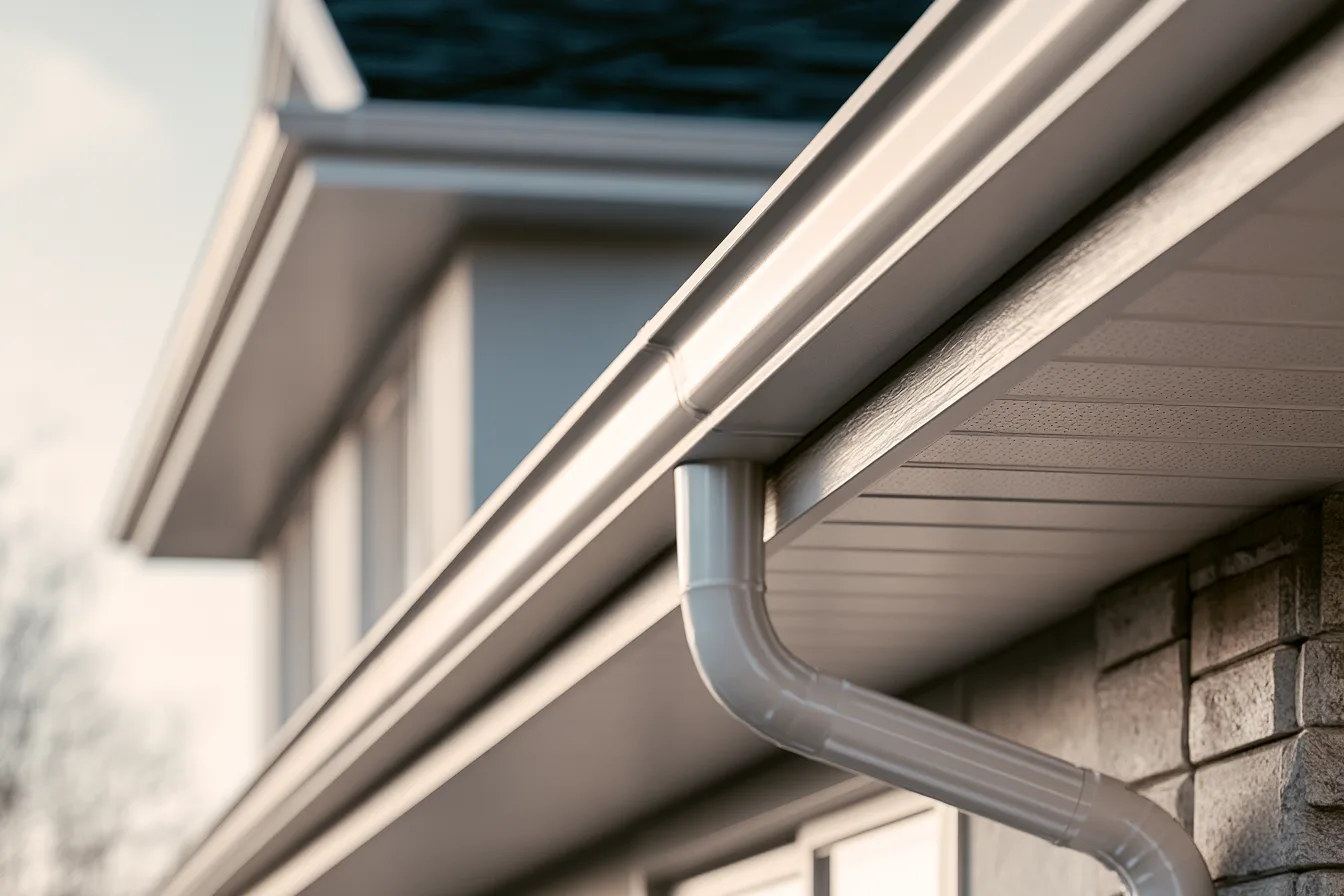
A downspout choked with debris backs water into the gutter. A low spot holds water between the outlets. A loose hanger lets the run drop away from the roof edge. Each can look like “bad gutters” in the rain, but changing the entire run will not help if its support or drainage route stays wrong.
When gutters are part of a roof replacement project, coordinate the roof-edge and drainage work. The sequence depends on what is being retained or replaced.
The gutter, supporting edge and discharge path work together. A proposal should explain which parts need repair or replacement.
Choose the profile, material and lengths that suit the roof drainage. Seamless runs still have corners, ends and outlets to detail.
Place and size outlets for the roof area and discharge path.
Fasten the run to sound support with the appropriate hanger arrangement.
Hangers need sound wood behind them. If the fascia has softened, driving a longer screw into the same damaged board does not rebuild that support. Fascia repair belongs with the gutter work where needed.
Check drip edge and how water leaves the covering into the gutter.
Kick-out and other flashing details can help direct water away from siding at roof-to-wall ends.
If water enters at a wall connection, the scope may also involve roof repair.
How the job runs
Coordinate this work with any planned roof replacement. The roofer can explain what can remain and which details need access.
Check run lengths, roof drainage, outlets and support.
The proposal names the runs, outlets and supporting wood that need work. It should also show how roof-edge repairs fit with any planned reroof.
Repair supporting details and install the agreed gutter and downspout arrangement.
Review the fall, outlets and discharge route, along with the completed work.
If you have already seen where water spills, tell us. There is no need to stand out in a storm or climb a ladder to gather more information.
A blockage, poor fall or another drainage problem needs checking.
The roof-edge connection or a joint may be directing water behind the run.
Attachment and the supporting fascia need assessment.
The discharge route may need adjustment so runoff does not collect beside the building.
What moves the number
Two gutters of the same length can be different jobs. A low, straight run with sound fascia takes different access and support work from a high corner where the board has rotted. Length matters, but the quote also needs to name those repairs.
Length and working height.
Corners, outlets and downspout routes.
Fascia and roof-edge condition.
The selected gutter system and appearance.
A branch can bend a run, pull a hanger loose or damage fascia. A gutter that still looks straight may have a changed attachment or fall. The inspection should include those parts before the run is reused.
If the branch also touched the covering, ask about storm damage assessment for the adjoining roof.
When both are being replaced, roofing work is commonly coordinated before final gutter installation to protect the new runs and complete the edge details. A standalone gutter repair or retained gutter may need a different sequence.
Sometimes. Check the run’s condition, attachment, size and fit with the proposed roof-edge work. Removal can reveal fascia damage that changes the plan.
Ask about the actual product and workmanship terms offered for the gutter work. Coverage varies; the warranty guide explains how to separate those promises.
Sand Springs Roofing Co
Tell us where the water spills or which section is loose. Our roofers can inspect the run and explain the work needed to restore useful drainage.
(918) 215-8903