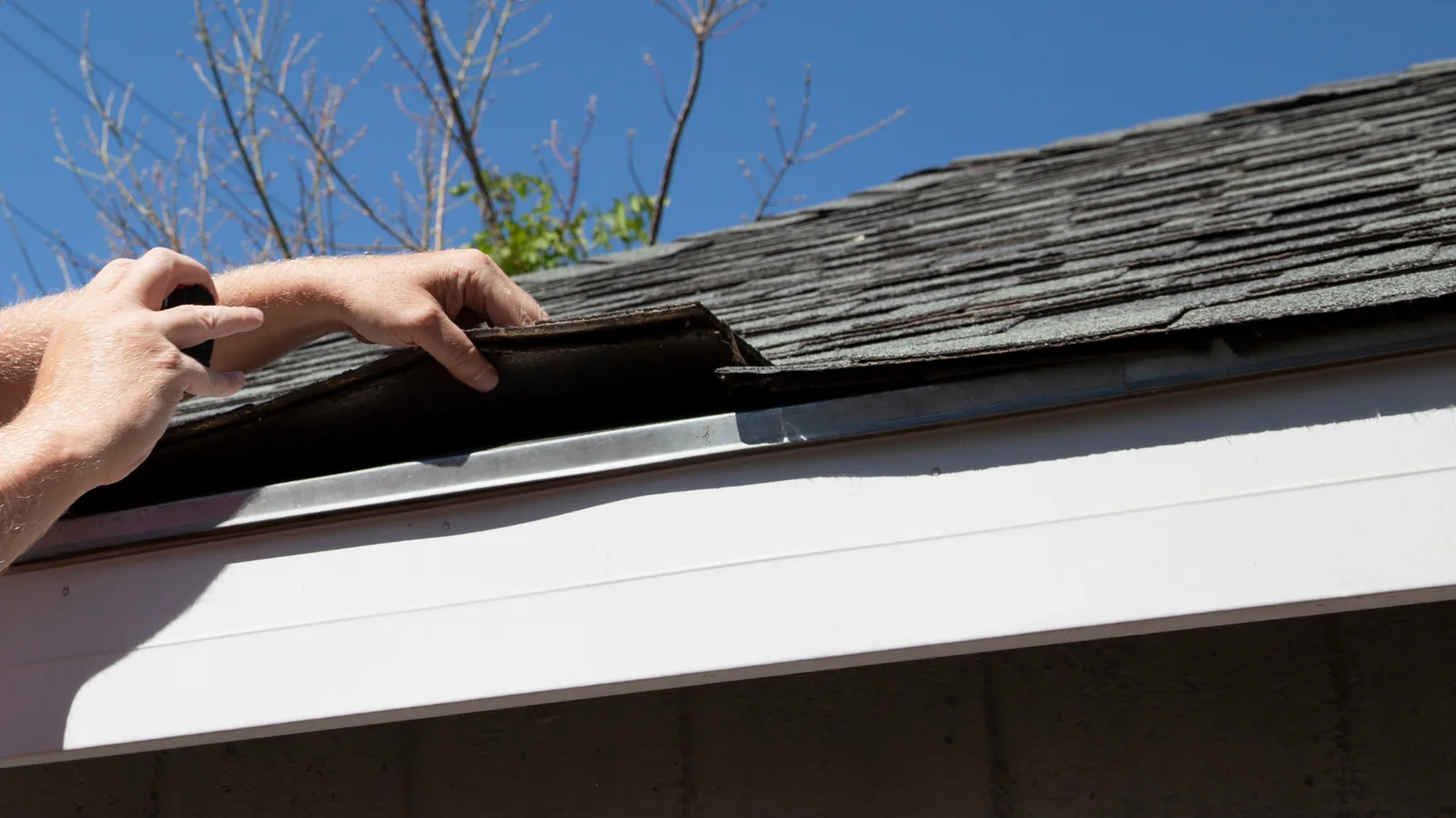
Roof age usually arrives secondhand. A disclosure sheet names the year the roof went on, or a neighbor remembers the summer the street had work done. Eventually that number starts to sound like a deadline. It is useful information, but it cannot tell you whether the covering is finished. Material, installation, weather and the roof's present condition all belong in the decision.
Age tells you where to look, not what to do
There is no birthday that ends a roof. A wet spot on a young roof can come from a contained failure, such as a pipe boot or flashing joint. On an older roof, the same symptom also raises the question of whether wear is becoming widespread. Neither age settles the cause by itself.
The reason age gets treated as the answer is that it's the only number most homeowners have. Nobody hands you a condition score. You've got a year, so the year does all the work. It's worth knowing what that year is standing in for: accumulated heat, accumulated wind cycling, whatever hail has landed on it, and how well the roof was vented and built to begin with. Those are the real variables, and they run at different speeds on different houses.
Two roofs the same age can face different conditions. One slope dries in full sun; another stays damp under shade and holds fallen leaves. An earlier repair or a change to the attic can affect one house and leave the next untouched. The inspection needs to follow those differences.
What actually wears a roof out
Sun and weather slowly change an asphalt shingle. As the material ages it can become brittle, and worn areas can lose the protective granules over the asphalt. Large bare patches are different from the loose granules a new roof can shed after installation. The extent and pattern of the wear matter.
Wind works on attachment and the bond between courses. When a seal is broken, a tab is easier for a gust to lift or crease. A broken seal does not always require replacement of the shingle: the manufacturer's repair instructions may allow hand-sealing when the shingle has no other damage. Fasteners, creases and material condition all need checking.
Hail can damage a shingle's reinforcing mat without leaving an obvious hole. A close inspection distinguishes that damage from ordinary wear, blistering or marks that have another cause. A record of hail near town is a reason to compare the timing of a concern, not proof that a particular roof was damaged.
The deck and attic matter too. In a vented attic, blocked intake or poor exhaust can limit airflow; air leaks from the house and indoor humidity can contribute to moisture on a cold deck. A properly designed unvented attic works differently. What each material trades off is laid out on its own page. What attic airflow does to shingle life has a post of its own.
What you can read from your own yard
You can notice useful signs without a ladder. Granules collecting at a downspout, especially alongside bare patches on an older roof, deserve a look. Some loose granules on a new roof are normal; the quantity in a gutter alone does not tell you whether the covering is done.
Look from a safe place in the yard for missing shingles, curled edges or an area that has changed since the last storm. Small cracks and creases may not be visible from below. You do not need to identify them yourself before arranging an inspection.
A new dip or sag in a roofline also needs attention. The cause could involve sheathing, framing or movement in the building. It should be assessed before the problem is treated as a shingle repair.
Inside the house counts too. Stains that spread after rain, a damp smell at the top of the house, daylight anywhere it shouldn't be: note what you see and where. Water runs along framing before it drops, so an indoor mark is evidence rather than a location, and the two are often nowhere near each other.
What only shows up with somebody on the roof
The closer inspection adds detail the yard cannot show. The roofer looks at the covering, attachment, flashing and penetrations and checks whether damage is isolated or repeated across the roof. Hail marks need to be considered with other evidence, not diagnosed by a dent in a gutter alone.
Shingle flexibility affects repairability. New work has to be fitted into the courses already there. If nearby material cracks when handled, the roofer needs to establish how far that condition extends. The response might be a larger repair or a replacement, depending on the roof.
The parts that are not shingles can explain a leak on an otherwise sound covering. A split pipe boot can let water follow the pipe; separated chimney or wall flashing can leave a gap at the joint. Valleys concentrate runoff, so an open lap there can carry substantial water inside. Soft decking needs investigation without treating every irregularity as proof of rot.
That is why the calendar cannot settle the work. What an inspection covers is the surface by surface version of everything above.
Sorting watch it from replace it
A repair is a sensible option when the failure is local and the surrounding roof can take the work: one boot, a flashing run or a small patch of storm-damaged shingles. What roof repair actually involves sits on its own page.
When leaks recur or damage covers several slopes, compare a larger repair with replacement. Several failures can indicate widespread wear, but they can also have different causes. The inspection should establish what is sound and what would remain after the repair.
There is no universal percentage of replacement cost at which a repair becomes the wrong purchase. Compare the actual scopes, the condition left in place and the work you expect to need next. A percentage by itself leaves those questions unanswered. What drives the price of a roof is broken out separately.
A short-term repair can still be useful when a replacement must be planned or budgeted for. Its limits should be clear. The point is to choose the work with a fair understanding of what it addresses and what it leaves for later.
The layer question, and what the city allows
One local rule changes the math here, and plenty of homeowners have never heard it. Building codes in this city allow only a single layer of shingles over the decking. So the cheaper looking move of laying a new roof on top of the old one is off the table on a house that already carries a layer. The next roof comes off to the deck first.
Removing the covering exposes the top of the deck and the earlier details. The roofer can identify damaged or unsuitable sheathing before fastening the new assembly. The underside may also be visible from an accessible attic, but that does not show every concealed joint or condition.
The city's published permit trigger is replacement of decking or structural support beneath the roof. The roofer should confirm the planned work with Neighborhood Services when that scope is involved. What the permit rules say is set out on its own page.
Where the number actually leaves you
If the roof is old enough that you are wondering about it, an inspection gives you something more useful than an age-based guess: the condition and the work it needs now.
Tell Sand Springs Roofing Co what you have noticed and start with a free roof inspection. Our roofers assess the concern and explain repair or replacement options. The services page describes the work available.
Roof age, the questions that come up most
What the calendar can settle, and what it leaves to the roof.
Is there an age at which a roof automatically needs replacing?
No. Age helps put wear in context, but material, installation, past damage and current condition determine the work. A free inspection is useful when the history is uncertain or the roof has changed.
What are the first signs a roof is getting old?
Missing tabs, curled edges, bare patches and a new indoor stain are reasons to arrange a look. A roof can also have damage that is hard to see from the yard. One visible symptom is enough to ask about; you do not need to wait for several.
Can I put new shingles over the old ones?
Sand Springs permits only one layer of shingles over the deck, so existing shingles must come off before new shingles are installed. That allows the top of the deck to be checked and repaired as needed.
Does an old roof still count for a storm claim?
Storm damage and age are two different conversations and it's worth keeping them apart. Policies generally cover sudden events like wind and hail, and generally exclude ordinary wear. Whether a given roof's damage is storm caused, and what it settles at on an older roof, is the carrier's decision after somebody documents what's actually up there. Nobody can promise you an outcome on that, this site included. How claims work has the longer version.
How do I tell whether to repair or replace?
Compare the extent of damage, the condition around it and the scope of the two proposals. A local repair can make sense on a sound covering. Widespread wear or brittle material may make replacement a better use of the budget.
Does a roofer have to get into the attic to judge a roof's age?
An attic visit may help investigate moisture, ventilation or the underside of the deck. It is not a way to date shingles precisely. Existing installation records and the exterior condition are useful too; discuss any needed attic access with the roofer.